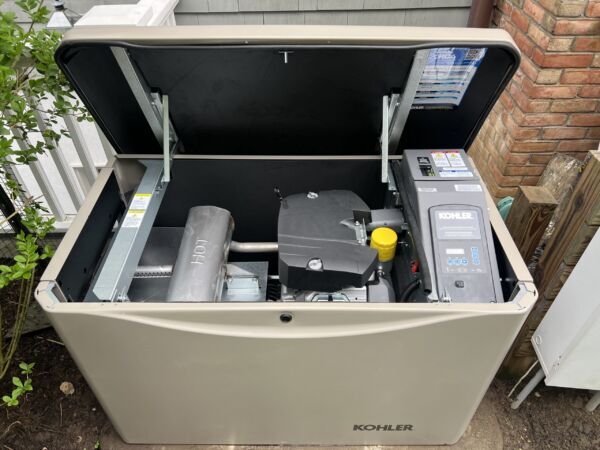
Generator maintenance documentation plays a central role in how service teams evaluate system condition, track performance changes, and respond to operational issues. Long Island Power Systems uses structured service records to support generator maintenance across residential, commercial, and industrial systems. These records help technicians review past service actions and understand system behavior before beginning work on-site.
Generator maintenance becomes more effective when accurate documentation is available for every service visit. Service records provide a clear history of inspections, repairs, and testing results, which support better service decisions and faster response during scheduled or emergency work. A generator maintenance company relies on this information to reduce uncertainty and maintain consistent service quality across different system types and operating conditions.
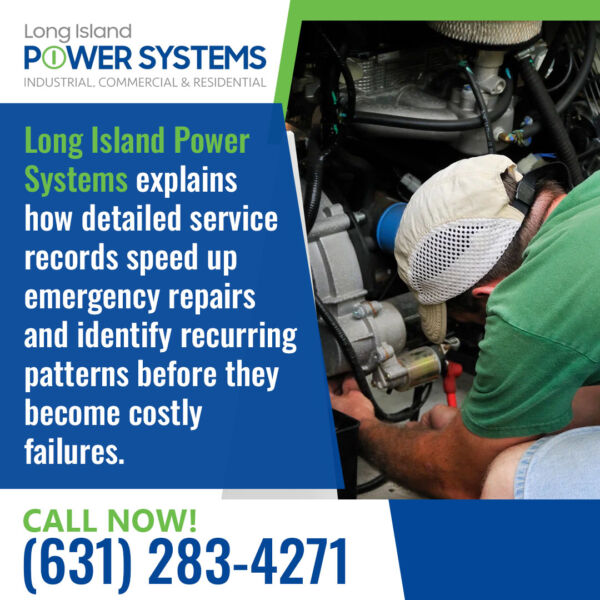
Documentation as a Technical Decision Tool
Service records act as a working reference during generator maintenance and help shape the direction of inspection tasks. They reduce uncertainty by providing documented system history that supports structured technical evaluation.
How Service Records Guide Diagnostic Direction
Service history outlines what has already been checked, adjusted, or repaired during earlier visits. This allows inspection work to start with context rather than a blank approach. Instead of repeating general testing across all components, attention can be directed toward specific areas linked to earlier service findings.
Different generator symptoms can originate from unrelated causes. For instance, irregular startup behavior may be associated with battery performance, control system response, or fuel delivery timing. Service documentation helps separate these possibilities by showing what was previously tested and what results were recorded. This reduces redundant checks and supports a more focused diagnostic path.
How Historical Data Highlights Recurring System Issues
Maintenance documentation reveals patterns such as repeated faults, performance irregularities, or component wear trends over time.
Long-term service records allow comparison across multiple maintenance cycles. This makes it easier to identify conditions that return after repair or develop gradually between service intervals. The focus shifts from isolated events to patterns that appear across time.
Recurring entries in maintenance logs often indicate underlying conditions that may not be visible during a single inspection. These may involve electrical inconsistencies, fuel system behavior, or load response variation. Reviewing these patterns supports a clearer interpretation of system conditions and helps prioritize future service actions based on documented behavior rather than single-point observations.
How Documentation Impacts Service Speed and Efficiency
Service documentation plays a direct role in reducing time spent during generator maintenance visits and supports more structured field operations. It allows technicians to work with prior system information instead of relying only on on-site findings.
Reduced Repeat Diagnostics During Service Visits
Access to prior inspection data improves efficiency in generator maintenance, limiting unnecessary retesting and shortening on-site evaluation time.
Service records provide a reference point for what has already been tested and verified during previous visits. This reduces the need to repeat baseline checks across all system components. Instead, diagnostic effort can be directed toward areas that have shown variation or require follow-up based on earlier findings. This approach helps streamline the inspection process and reduces time spent revisiting resolved conditions.
Faster Identification of Known System Conditions
Recorded service history allows technicians from a generator maintenance company to recognize previously documented issues and respond with more direct solutions. When service patterns are already documented, similar symptoms can be matched against past cases.
This reduces the time needed to interpret system behavior during a visit. Known conditions can be addressed more directly because prior service outcomes provide context for how the system responds under similar circumstances.
Generator Documentation Comparison (Generac vs Kohler)
| Factor | Generac Systems | Kohler Systems |
| Data Source | Controller-generated logs | Technician service reports |
| Fault tracking | Automatic error codes and alerts | Manually recorded observations |
| Runtime information | Stored operating hours and event history | Logged during inspection visits |
| Performance data | Voltage, frequency, system status from controller | Load test and field measurements |
| Maintenance records | Digital logs combined with system history | Structured inspection and service reports |
| Diagnostic strength | Strong in automated system events | Strong in field-based condition reporting |
| Role in generator maintenance | Supports fast identification of system events | Builds detailed service history over time |
Documentation Role During Emergency Generator Service
Service documentation plays a practical role during urgent generator maintenance work, especially when systems are affected by outages or weather-related disruptions. It provides reference points that support faster field decisions and clearer coordination between service teams.
Using Service Records During Outage Response
Technicians use prior documentation to reduce troubleshooting time during urgent service calls. During outage conditions, service records help outline recent system behavior, previous faults, and completed repairs.
This information reduces the need to repeat basic checks and allows field work to focus on the most relevant system areas first. It also supports faster recognition of conditions that have already been addressed in earlier visits.
Reducing Uncertainty
Existing records help generator maintenance teams narrow down likely causes when multiple systems are affected by severe weather conditions. Storm events often place similar stress on multiple generators within a service area.
In these situations, documented service history helps separate system-specific issues from wider environmental impacts. Prior records also highlight which units have shown sensitivity to load changes, fuel issues, or battery performance shifts, which helps guide the direction of inspection work.
Supporting Faster Service Coordination
Shared documentation allows teams handling Generac generator maintenance and other systems to align on system conditions before arriving on-site.
When multiple technicians are involved in response operations, shared access to service records supports a consistent understanding of system status. This includes prior diagnostics, maintenance actions, and known conditions recorded during earlier visits. With this information available, coordination between field teams becomes more structured, and service actions can be aligned before reaching the location.
Why Generator Maintenance Documentation Matters
Generator maintenance documentation supports continuity in service work by creating a structured record of system condition over time. This record helps align inspection outcomes, repair decisions, and future maintenance planning across multiple service visits.
Consistency in Service Decision-making
Accurate records support consistent technician decisions across multiple generator maintenance visits. Service history reduces variation in how similar issues are handled during different visits.
When prior findings are available, technicians can reference established observations rather than starting each inspection independently. This supports a more uniform approach to diagnosing and addressing system conditions over time.
Alignment Between System Condition and Maintenance Actions
Documentation helps ensure service work reflects actual system history and observed performance. Maintenance records connect current service actions with previously documented system behavior. This alignment helps prevent decisions from being based on isolated observations. Instead, service work reflects both present conditions and recorded performance trends, creating a clearer link between system status and maintenance activity.
Improved Planning for Future Maintenance Needs
Service records provide reference data for scheduling Generac or Kohler generator maintenance and identifying future service requirements. Historical documentation helps identify patterns in service frequency, component wear, and system performance changes. This information supports planning for upcoming maintenance work by highlighting when specific systems may require attention based on past service cycles and recorded conditions.
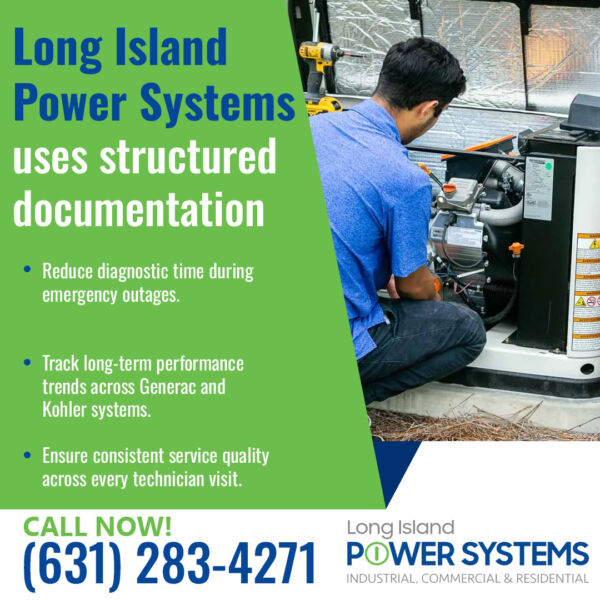
Role of Long Island Power Systems in Generator Maintenance Documentation
Long Island Power Systems in Southampton, New York, applies a structured approach to generator maintenance documentation across residential, commercial, and industrial power systems. Each service visit is recorded to maintain a clear history of inspections, diagnostics, and completed maintenance work. This recordkeeping supports consistent tracking of system conditions over time and helps establish continuity between service visits.
Structured Service Documentation Process
Long Island Power Systems maintains detailed service records for every maintenance visit, including inspections, diagnostics, and completed service actions. Every maintenance visit follows a defined documentation process that captures both technical readings and field observations.
Our technicians record system status at the time of inspection, including operational performance, identified concerns, and any corrective actions completed during the visit. This structured approach helps create a reliable service history for each unit.
Accurate documentation also supports clearer communication between service visits. When a system is revisited, prior records provide context on what was previously inspected and what actions were taken. This reduces the need to repeat basic checks and allows attention to be directed toward current system conditions.
Documentation Across Generac and Kohler Systems
Different generator systems require different types of service documentation due to variations in design and diagnostic capabilities. Generac systems often include controller-based data that records operational events and fault history. Kohler systems rely more heavily on technician-generated reports combined with inspection and testing results.
Long Island Power Systems structures documentation to reflect these differences while maintaining consistency in how service records are stored and reviewed. This makes sure that both Generac and Kohler generator maintenance history remains organized and accessible for future service needs.
Support for Ongoing Maintenance Planning
Service documentation is used to guide preventative maintenance schedules and support long-term system reliability tracking.
Maintenance records provide a reference point for understanding how a generator system performs over time. This includes tracking service intervals, identifying recurring conditions, and reviewing performance changes across multiple visits.
By maintaining consistent documentation, future maintenance planning becomes more structured. Service schedules can be based on actual system history rather than isolated observations, supporting better continuity in generator maintenance planning and long-term equipment care.
Keep Your Generator Ready With Professional Service Support
Reliable power starts with proper maintenance and accurate service records. Long Island Power Systems provides professional generator maintenance supported by detailed documentation and experienced field technicians.
For service inquiries, maintenance scheduling, or emergency support, reach out to our team directly at (631) 283-4271.